Complete TikTok Shop Affiliate Guide: Mohamed Camara's Step-by-Step Course for Beginners
Mohamed Camara shares a comprehensive 2+ hour course covering everything from setting up TikTok Shop affiliate accounts to finding winning products and generating substantial income through strategic content creation.
February 13, 2026
In this extensive tutorial, Mohamed Camara reveals the exact strategies that have enabled him to generate $5,000 weekly in profit through TikTok Shop affiliate marketing. The course promises to provide viewers with the same information that has helped his students achieve remarkable results, including Pedro earning $1,000 daily from Mexico, Sadaf generating $50,000 in four months, and Jordan making $16,000 in just three weeks.
Camara emphasizes that this comprehensive guide covers everything beginners need to know about TikTok Shop affiliate marketing, from initial setup and account approval to product research and viral content creation using AI tools. He confidently states that following the course step-by-step could help viewers earn an additional $10,000-$15,000 within 45 days, making it a potentially game-changing resource for aspiring affiliate marketers.
Getting Approved for TikTok Shop Affiliate

Mohamed Camara explains that accessing TikTok Shop affiliate requires meeting three specific requirements: having 5,000 followers on TikTok, being at least 18 years old, and posting videos within the last six months that show hands or body parts. He notes that not everyone will have access to this program due to these restrictions.
Camara presents two methods for obtaining the necessary followers. The first option involves purchasing an established account for $200-$500 from trusted suppliers, which he claims provides the fastest path to getting started. He emphasizes the importance of using reputable suppliers who offer refund policies and warns against buying from unreliable sources that could result in banned accounts. When purchasing an account, he advises following a careful transition process: waiting five days before making any changes, engaging with content naturally, and gradually updating profile information to avoid suspicious activity flags.
For those preferring not to purchase accounts, Camara offers a more technical but cost-effective alternative that requires only $10-$15 and can be completed in under eight hours. This method involves growing an account organically to reach the 5,000 follower threshold through strategic advertising.
Building Followers Through TikTok Ads

Camara demonstrates how to grow a TikTok account to 5,000 followers using TikTok's advertising platform. The strategy involves creating a simple seven-second video with ominous music and text saying 'follow for good luck, scroll for seven years of bad luck.' This type of engagement-bait content is designed to encourage follows when promoted through paid advertising.
The process requires setting up a TikTok ads account and authorizing the video for advertising use. Camara walks through the technical steps of enabling ad authorization on the post, copying the video code, and setting up the advertising campaign in TikTok Ads Manager. He recommends targeting English-speaking countries while avoiding expensive markets like the United States to keep costs low.
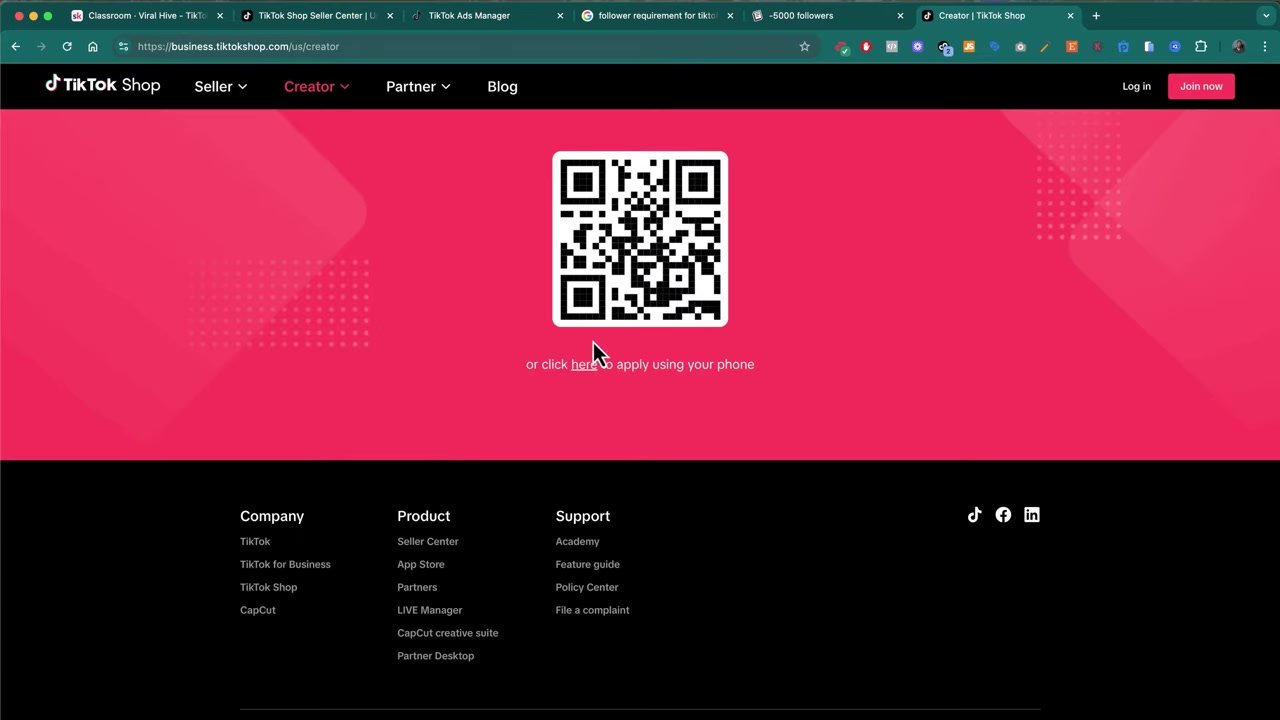
The advertising setup focuses on community interaction as the objective, with optimization specifically set for follows rather than views or engagement. Camara advises starting with a $20 budget but monitoring the account closely to stop the ads immediately once the 5,000 follower threshold is reached. After achieving the required followers, users can apply for TikTok Shop Creator status through the official TikTok Shop creator website.
Finding Winning Products to Promote

Once approved for TikTok Shop affiliate, Camara shifts focus to product selection, emphasizing that success depends more on how products are sold rather than which specific products are chosen. He establishes four key criteria for selecting profitable products: minimum $3 commission per sale (typically 15-20% commission rate), at least 50,000 past orders to prove market validation, minimum 3,000 units in stock to avoid inventory issues during viral campaigns, and products that are relatable to the creator's audience and expertise.
Camara recommends using tools like PostPro for product research, which shows trending products and their performance metrics. He demonstrates how to identify growing products by looking for green trending indicators and analyzing commission structures. Examples mentioned include handheld pressure washers, Nello products, NAD items, and Physician's Choice supplements.
Additionally, Camara mentions that his community provides weekly lists of winning products, making product research even more accessible for members. He shows how community members can access viral product recommendations through dedicated research tabs, featuring top performers like Lemme Burn, Physician's Choice, Nello, and Goalie products. While these community recommendations provide excellent starting points, he clarifies that creators aren't limited to these suggestions and can explore other product categories like fashion, provided they meet the established criteria.
Ordering Product Samples: Amazon vs. TikTok Refundable Samples

Mohamed Camara outlines two primary methods for obtaining product samples necessary for TikTok Shop affiliate marketing. He emphasizes that having the physical product in hand is mandatory for commission eligibility, as videos must show the actual product. His preferred approach is ordering directly from Amazon, despite higher costs, because it's faster and doesn't require approval processes.
The alternative method involves TikTok's refundable sample program, where creators pay upfront but receive refunds after generating their first sale with that product. However, Camara notes this option isn't always available and can take up to five days for delivery. He strongly advises against free samples, explaining they often result in seven-day waits followed by denials, calling it a waste of time since 'money loves speed.'
Camara recommends starting with just three carefully selected products rather than overwhelming oneself with too many options. He shares his personal success story of generating $16,000 in profit from just two products, demonstrating that quantity isn't necessary for significant earnings in TikTok Shop affiliate marketing.
Understanding TikTok Content Types for Viral Success
Camara introduces his systematic approach to viral content creation, emphasizing that going viral isn't luck but strategic planning with scientific frameworks. He utilizes an app called PostPro to analyze trending content and break down different content types that creators can choose based on their personality and comfort level.
He details six main content types: faceless videos (good for privacy but with lower hit rates of 1 in 10), skits involving roleplay scenarios, lifestyle content showing everyday activities, conspiracy videos (his personal favorite with 1 in 5 success rates), talking heads where creators speak directly to camera, and voiceovers recorded during editing. He also mentions bottom-of-funnel content that directly promotes products but requires posting 20 videos daily with only 1 in 100 going viral.
Camara advises creators to select one content style and stick with it for their first TikTok Shop account, emphasizing consistency over variety. He reassures viewers that success doesn't require being extroverted or outgoing, as multiple content formats accommodate different personality types and comfort levels with being on camera.
The Copycat Method: Analyzing and Recreating Viral Content
Camara introduces his signature 'copycat method,' which involves identifying top-performing viral videos and recreating them with improvements. Using PostPro, he demonstrates how to find trending videos and analyze why they succeeded, focusing particularly on a viral Lemme Pur supplement video that garnered 1.4 million views.
The tool provides AI-powered analysis breaking down successful videos' hooks, storylines, lighting, tone, and on-screen text elements. Camara emphasizes that the most critical aspect is analyzing the first three seconds of viral videos to understand what makes viewers stop scrolling and continue watching. He shows an example video with the hook 'Kourtney Kardashian, you are about to cut me a check' that effectively captured audience attention.
Rather than copying personality traits, Camara instructs viewers to focus on structural elements like pacing, energy, and visual components that contribute to viral success. He promises to reveal the exact script structure and key points to cover for any product in subsequent videos, making the viral content creation process systematic rather than guesswork-based.
The Copycat Method: Analyzing Viral TikTok Hooks
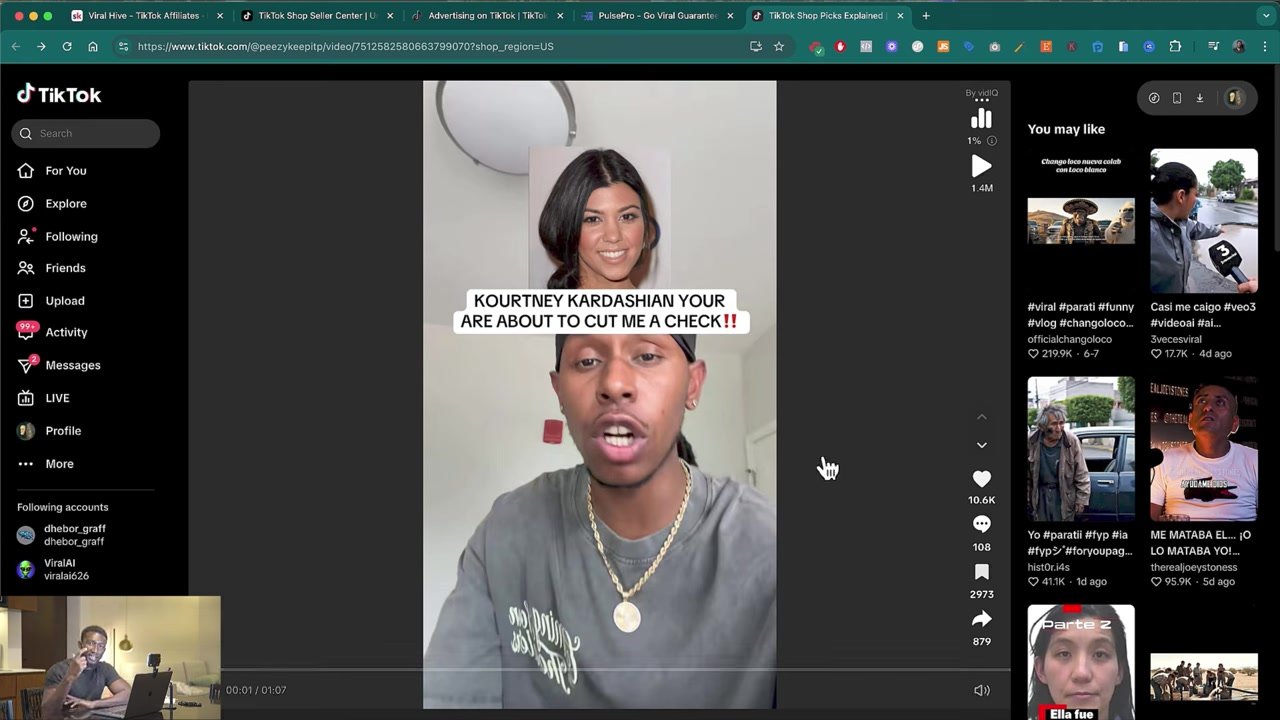
Mohamed Camara demonstrates his copycat method by analyzing viral TikTok videos frame by frame. He examines a video featuring Kourtney Kardashian that gained millions of views, breaking down its psychological elements including the visual placement of the camera, celebrity imagery, high-energy audio hooks, and strategic text overlays. Camara explains how creators use techniques like starting recording before setting the camera down to create visual intrigue that psychologically hooks viewers.
The instructor emphasizes that successful viral content combines multiple elements simultaneously - visual celebrity recognition, dynamic camera movement, compelling audio with tension-building phrases, and readable text elements. He shows examples across different niches and languages, demonstrating how the same psychological principles apply universally. Camara stresses that creators don't need to be original but should model proven formulas that the TikTok algorithm already recognizes as successful.
The Million Dollar Script Formula
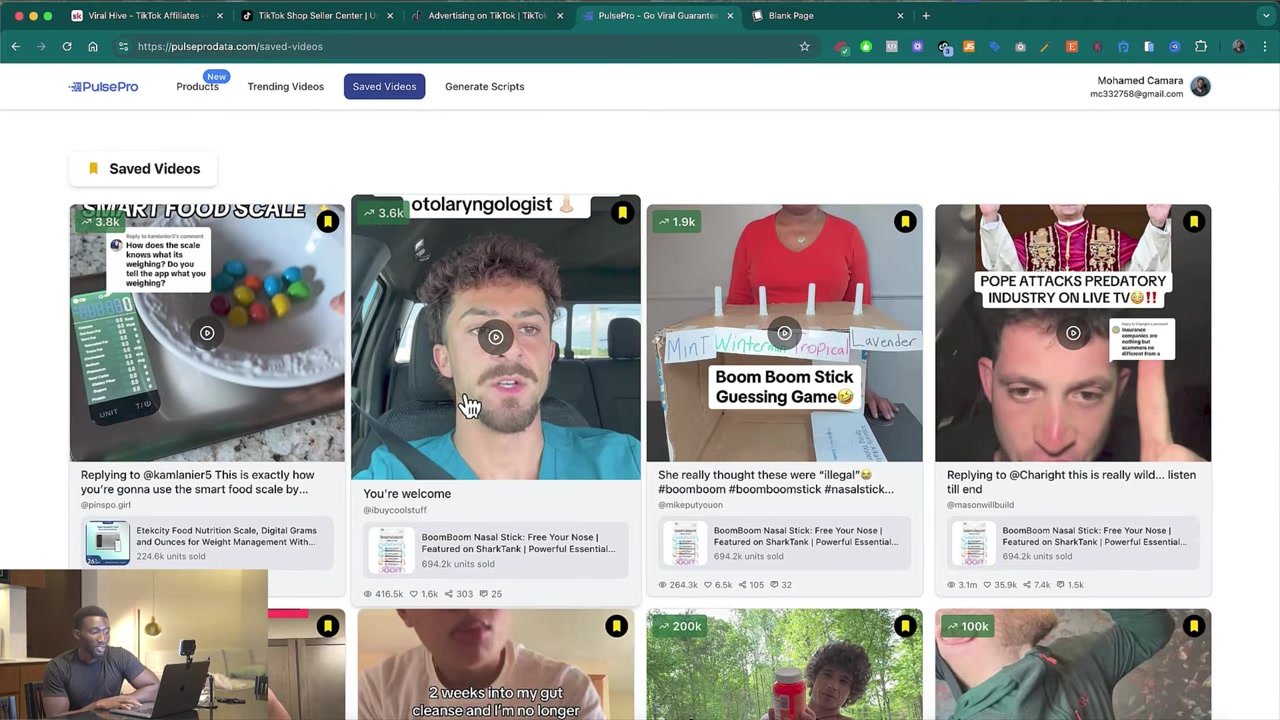
Camara introduces his psychological script structure for converting viewers into buyers, consisting of four key components: hook, pain creation, solution presentation, and call to action. He explains that after capturing attention with a stolen hook from the copycat method, creators must build emotional pain by making viewers envious, jealous, or fearful through storytelling. The instructor uses the analogy of selling a good night's sleep rather than just a mattress, emphasizing the importance of addressing emotional needs rather than product features.
The script progresses from creating negative emotions (pain) to providing positive solutions, followed by highlighting product benefits rather than technical features. Camara stresses the psychological principle that humans are motivated by emotions, requiring creators to tap into viewers' inherent problems and desires. The final call to action should be brief and direct, incorporating urgency, fear of missing out, and discount opportunities to drive immediate purchasing decisions without overselling.
Advanced Viral Growth Tactics
Mohamed Camara reveals advanced tactics that comprise the final 5% of viral success, starting with rage baiting - deliberately creating controversy to polarize comment sections and increase engagement. He demonstrates how creators can reference controversial figures or make polarizing statements that generate heated discussions, ultimately boosting the algorithm's perception of the video's engagement value.
Additional growth strategies include posting three times daily for consistent algorithm exposure, replying to comments with video responses to compound viewership, and creating multiple accounts for initial engagement boosts. Camara explains how video replies to comments show the new content to everyone who watched the original video, creating a snowball effect. He emphasizes that these tactical implementations can be the difference between achieving $10,000 in one month versus two months, positioning these strategies as essential for rapid TikTok Shop success.
Identifying Viral Video Potential Through Early Metrics

Mohamed Camara reveals his method for predicting whether a video will go viral within the first hour of posting. He explains that he focuses on two critical metrics to make this determination and demonstrates this using a real example from his own content creation.
Camara showcases a successful video created by another TikTok creator promoting oil of oregano supplements using conspiracy-style content. The original video achieved 13 million views and 170,000 likes, featuring a narrative about celebrities being silenced for exposing parasites in the food industry. He emphasizes the importance of staying current with trends when using the copycat method, ideally copying content the same day it starts gaining traction.
To illustrate his copycat method in action, Camara plays his own version of the viral video, where he adapted the same conspiracy narrative and product promotion strategy. His version follows the same structure but includes his own twist, such as using rage-baiting techniques by deliberately mislabeling a rapper as a doctor to encourage corrective comments and engagement.
Key Metrics for Video Success Analysis
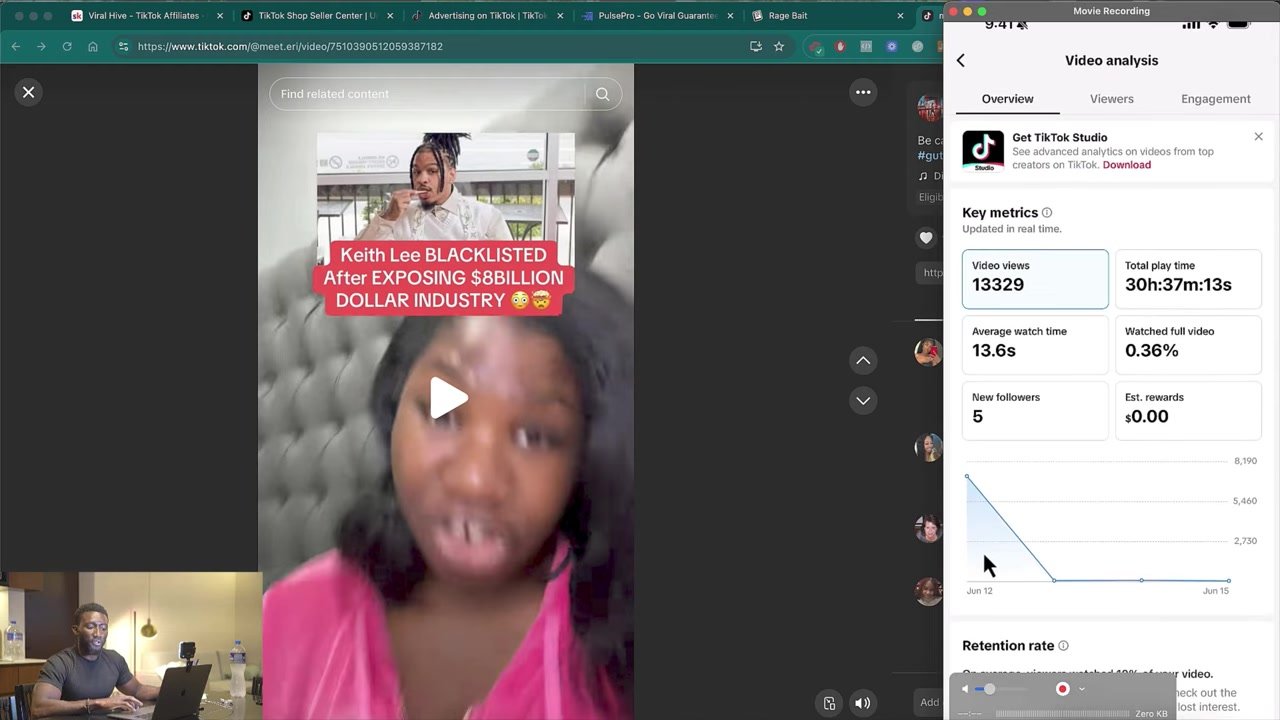
Camara breaks down the specific metrics he monitors to predict viral success, focusing primarily on average watch time and full video completion rates. He explains that average watch time indicates hook effectiveness, with anything above 10 seconds being considered good performance, compared to the typical 3-second average for most TikTok videos.
For retention analysis, Camara demonstrates how to read TikTok's analytics, showing that his video maintained 55% retention at the 3-second mark, significantly higher than the typical 20% retention rate. He explains that the retention graph should show at least 50% retention at 3 seconds to indicate a strong hook.
The second crucial metric is the watch full video percentage, which should ideally reach 2-3% for optimal performance. Camara notes that while his hook performed well due to copying a successful format, his storyline needed improvement, as indicated by lower completion rates. This analysis helps creators understand which elements of their content need refinement.
Strategic Video Recreation and Audience Targeting
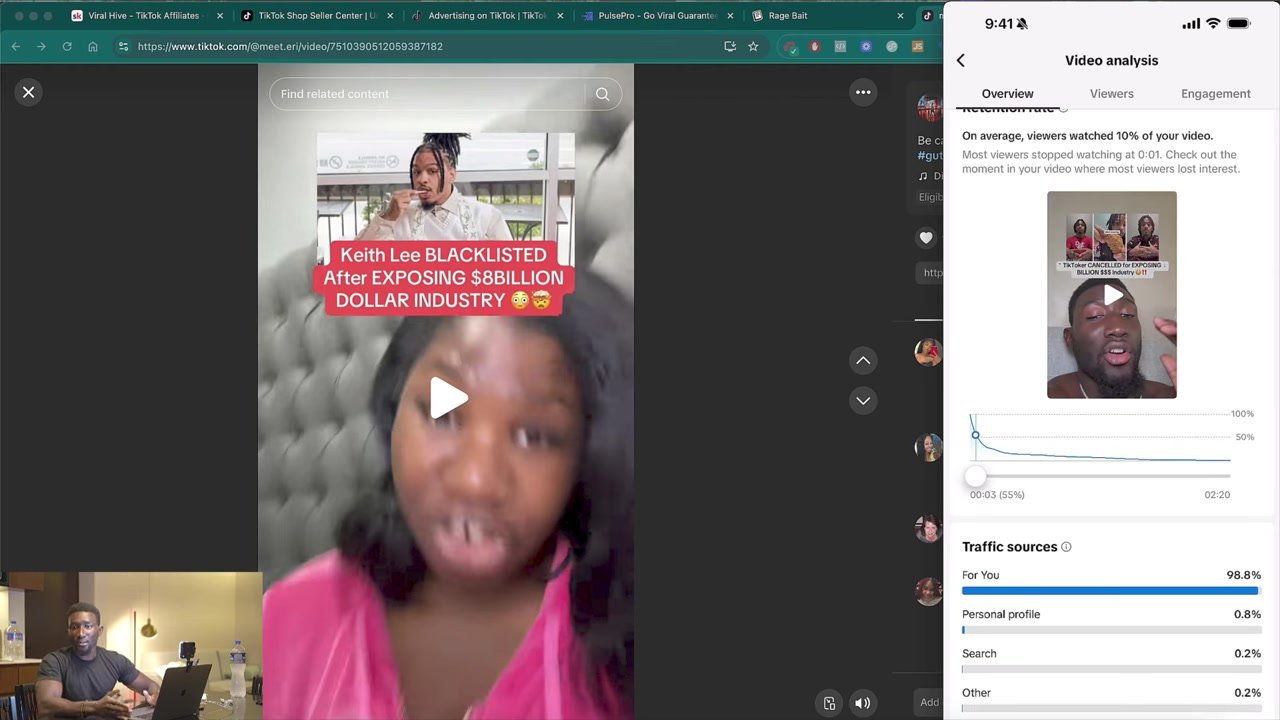
Camara explains his strategy for improving underperforming videos through systematic recreation and audience analysis. He demonstrates how to use comment replies as opportunities to create follow-up videos, essentially getting multiple attempts at viral content from a single concept. The key is recreating the same video multiple times with improved storylines based on metric feedback.
Using audience demographics from TikTok analytics, Camara shows how to ensure content reaches the right viewers. He analyzes that 100% of viewers were non-followers, confirming that TikTok's algorithm prioritizes content quality over follower relationships. For his supplement promotion, he identified that the target audience should be 80% female and aged 25-54, based on product review demographics.
Camara emphasizes that successful creators shouldn't hesitate to remake the same video concept repeatedly, as different audiences will see each iteration. He references the original creator who made the same type of video eight times, achieving millions of views each time. This approach allows creators to refine their storytelling and targeting with each iteration while maximizing the potential of proven concepts.
Video Editing and Content Optimization Process
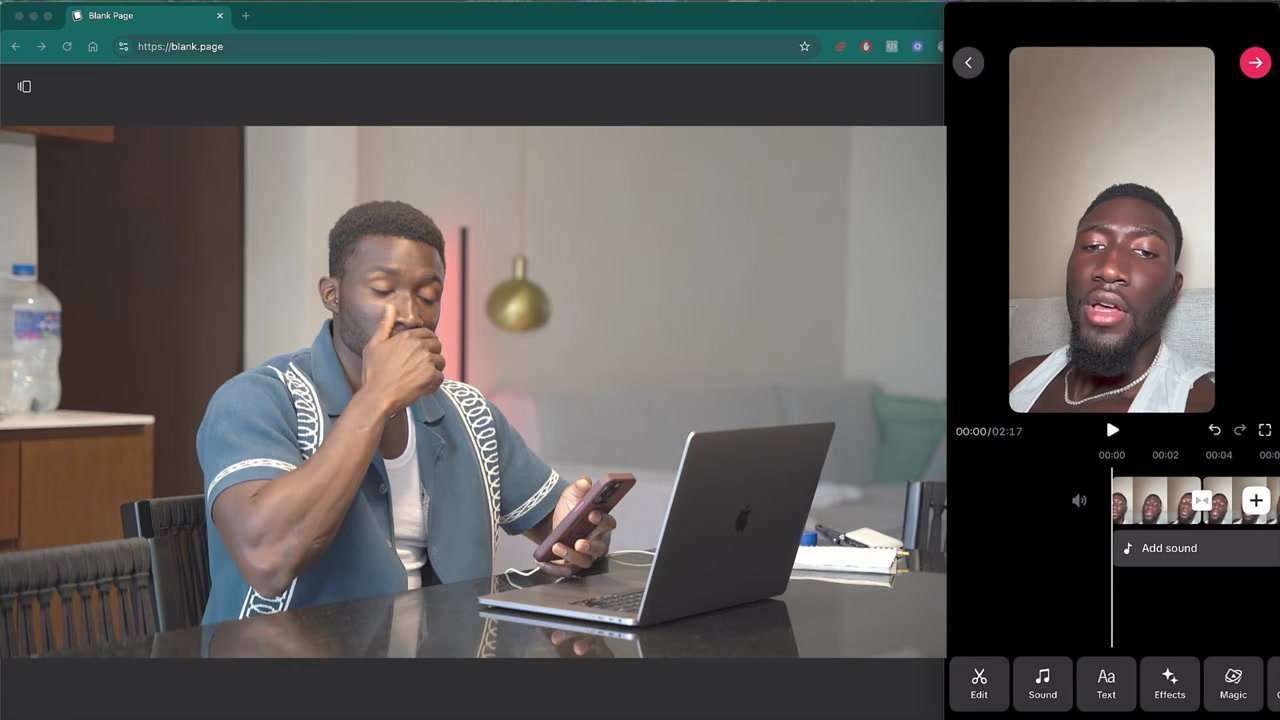
Mohamed Camara demonstrates his video editing workflow, showing how he trimmed a three-minute recording down to 2 minutes and 17 seconds to improve viewer retention. He explains his strategic decision to target women aged 35 and older by shifting the messaging from digestive health to cosmetic benefits like clear skin and addressing adult acne.
The creator details his process of adding visual assets and overlays to enhance engagement, including screenshots from reference videos and strategic text placement. He emphasizes the importance of using emotionally compelling imagery, including repulsive visuals like adult acne and white tongue conditions, to create urgency and motivate viewers to take action. Camara also explains how he selects different celebrity clips (switching from Kevin Gates to Terrence Howard) to appeal to specific age demographics.
Scaling TikTok Shop Affiliate Marketing
Camara transitions into discussing how to scale TikTok Shop affiliate marketing operations, acknowledging that viewers who reach this section demonstrate serious commitment to the process. He emphasizes that the key to scaling lies in understanding and avoiding common problems that can derail affiliate marketing efforts.
The creator introduces the concept of TikTok's violation system, explaining that the platform uses artificial intelligence to detect content that violates community guidelines. He mentions that violations are ranked on a tier system from 0 to 24 points, with each violation typically adding one point to an account's record.
TikTok Violations and Compliance Guidelines
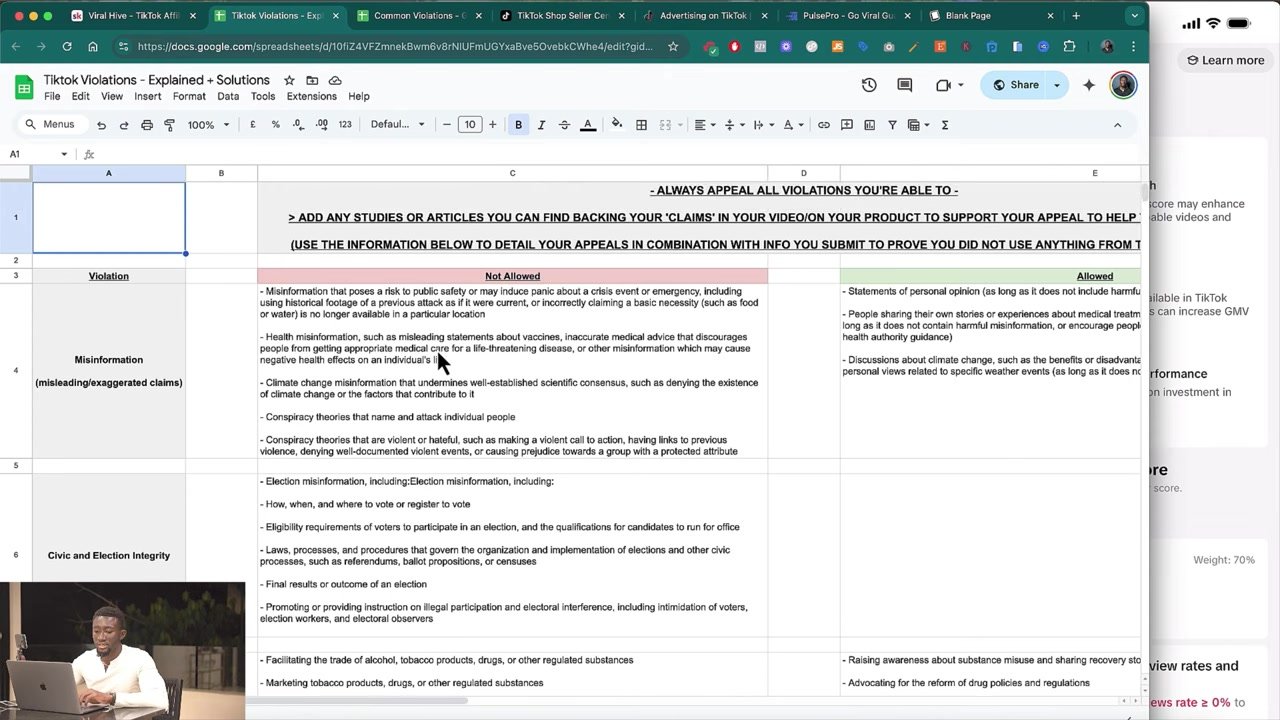
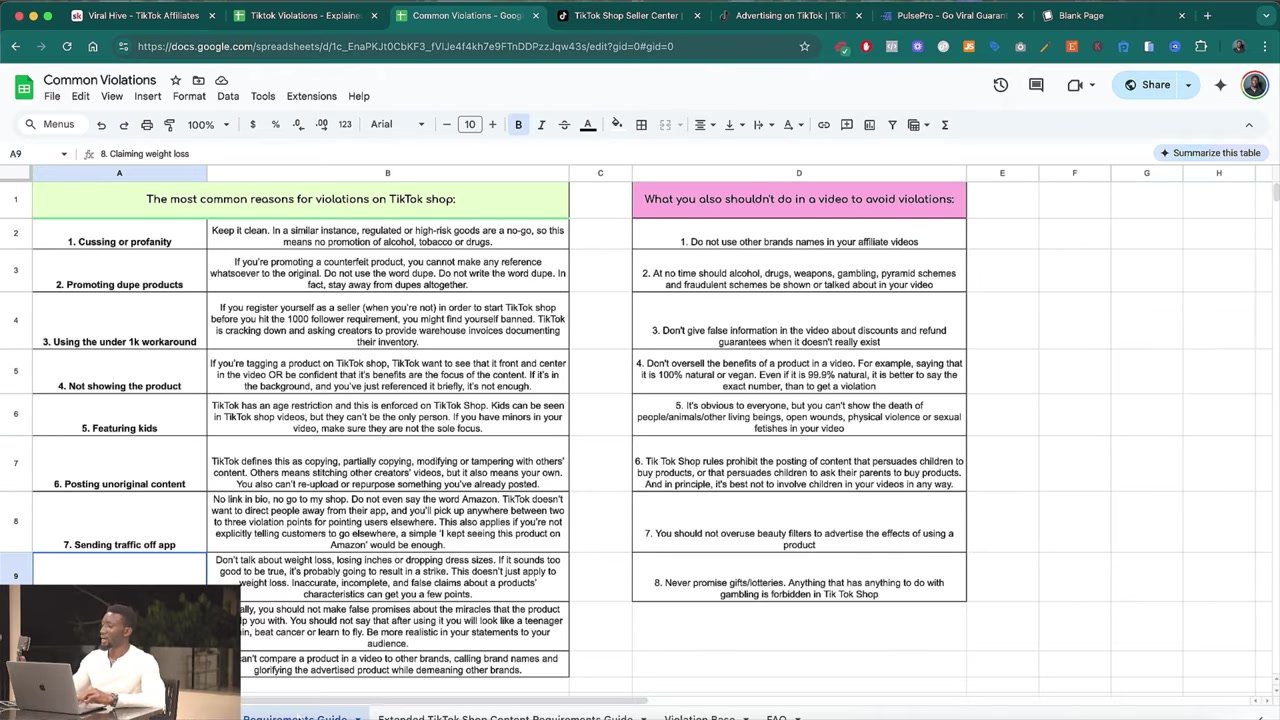
Mohamed Camara presents a comprehensive cheat sheet covering TikTok's do's and don'ts to help creators minimize violations. He breaks down specific violation categories including misinformation (avoiding topics like riots, suicide, or controversial health claims like vaccines), civic and election integrity issues, and prohibited content involving alcohol, tobacco, or drugs.
The creator shares personal experience with violations, including having an entire account banned for discussing celebrity weight loss in a way TikTok deemed body shaming. He advises creators to frame statements as personal opinions rather than factual claims and to focus on sharing personal experiences. Camara also addresses technical violations like unoriginal content, explaining that creators must modify downloaded clips by changing color, tone, or speed to avoid detection by TikTok's AI systems.
TikTok Violation Appeals and Content Strategy
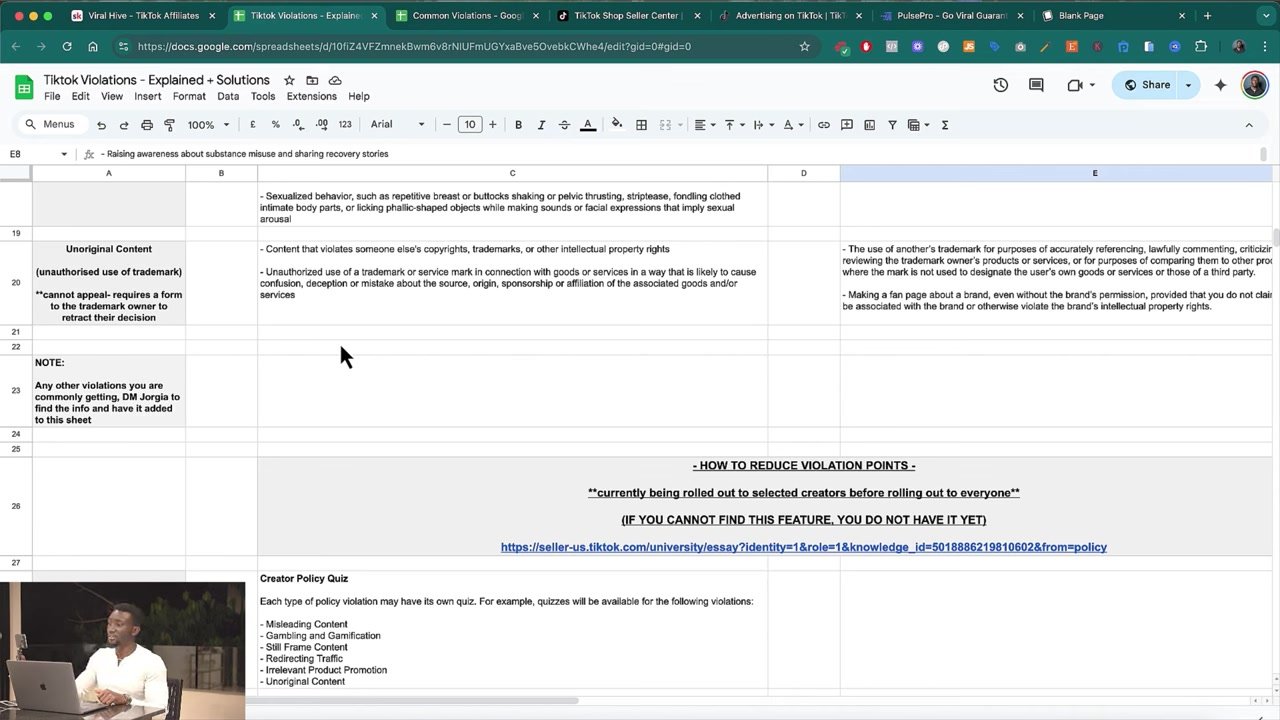
Mohamed Camara provides detailed guidance on handling TikTok violations and appeals. He explains that for conspiracy-style content, creators should record their entire laptop screen rather than just the phone display to avoid being flagged for unoriginal content. When violations occur, Camara recommends immediately appealing by stating the content was posted as opinion and requesting manual review.
The creator outlines the violation point system, explaining that accounts receive one point per violation and face suspension after reaching 24 points within 90 days. He provides a comprehensive cheat sheet of common violations to avoid, including excessive profanity, fake product promotion, showing children in videos, mentioning external links, and making specific weight loss claims. Camara emphasizes the importance of reviewing content before posting to identify potential flag triggers.
TikTok Shop Promotion Score and Performance Metrics
Camara introduces TikTok's promotion score system, which rates creators on a 5-star scale based on customer satisfaction with products purchased through their videos. He explains that maintaining a high score (close to 5 stars) provides significant advantages including enhanced content reach, increased For You page placement, brand campaign invitations, free samples, and faster return on investment for ads.
The scoring system evaluates both content quality and product satisfaction. Camara warns that controversial content generating negative comments can harm scores, even if it drives temporary sales. He stresses the importance of keeping content clean and ensuring promoted products meet the expectations set in videos. The creator also mentions that quiz options may become available after 90 days of TikTok Shop activity to help remove violation points.
Content Batching System and Account Management Strategy

Mohamed Camara details his systematic approach to content creation through batching, which involves recording multiple videos during dedicated time blocks rather than creating content randomly. His specific schedule includes recording three videos between 10 AM and 12 PM, then posting at strategic times: 1 PM, 7 PM, and 6 AM the following day. He identifies optimal posting windows as 6-8 AM, 11 AM-1 PM, 4-6 PM, and 9-11 PM.
For account safety, Camara advises creators to stop posting on accounts approaching high violation counts to avoid losing accumulated earnings. He recommends setting up automatic payments when available and suggests opening multiple accounts as a safety strategy. When violation counts reach around 8 points, he advises switching to alternative accounts while the original account's violations expire. The creator also introduces the concept of hiring editors from the Philippines at $3-4 per hour through onlinejobs.ph, providing a detailed job posting template for finding skilled video editors to handle the tedious editing process.
Hiring Video Editors and Brand Deal Opportunities
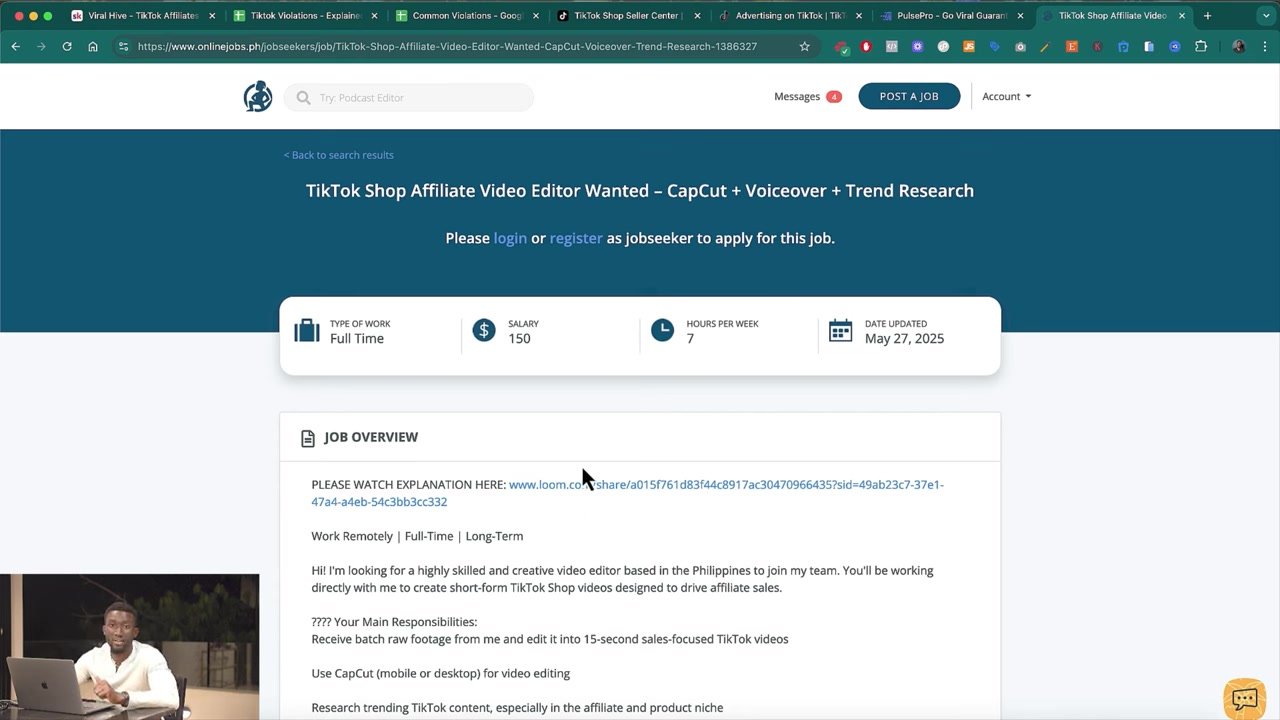
Mohamed Camara discusses the benefits of hiring video editors to scale TikTok Shop affiliate marketing efforts. He explains that creators can use platforms like Upwork or Fiverr to find editors for $5-10 per video, setting up payment terms through apps like Wise. This approach allows creators to free up time and potentially run multiple accounts, including faceless video operations.
Camara then reveals an additional revenue stream through brand deals available in their community. He shows how brands reach out offering upfront payments of $300 plus increased commission rates of 50% for promoting their products. These opportunities can generate an extra $1,000-2,000 monthly in profit before even posting videos. He notes that creators typically need about a month of posting and results before qualifying for these brand partnerships.
Introduction to TikTok Live Selling Strategy
Mohamed Camara introduces live selling as a powerful alternative to traditional video content, explaining how creators can earn $100-500 per hour through live broadcasts. He demonstrates how live selling works by showing active TikTok Shop live streams, noting one example with 244 viewers selling products worth over $3 per commission with 15,000 units sold.
Camara explains the key differences between video content and live selling using ChatGPT analysis. While videos provide evergreen, passive content that can generate sales long-term, live selling offers real-time interaction with higher conversion rates. He emphasizes that live selling is currently untapped with less competition, making it easier to avoid violations while building direct relationships with customers through immediate engagement and urgency tactics.
Live Selling Setup and Script Creation

Mohamed Camara breaks down the practical aspects of going live, explaining that creators need only a 5-6 minute script that repeats throughout the broadcast. He demonstrates using ChatGPT to create effective live selling scripts, inputting product details, pricing, and requesting emphasis on benefits over features while incorporating FOMO and urgency elements.
Camara shows his physical setup using a $10 phone stand and lighting from Amazon, then walks through the technical process of starting a TikTok live broadcast. He demonstrates how to add products, pin them to the stream, and emphasizes the importance of maintaining high energy while prioritizing comment responses. He concludes by noting that live selling may actually be easier than creating videos, though both approaches have their merits for different creator preferences and goals.
Conclusion
Mohamed Camara concludes his comprehensive TikTok Shop affiliate guide by emphasizing that making money online requires initiative, time, and effort, but the strategies he's outlined make it achievable for beginners. He notes that while he's made this extensive course free, additional resources and personalized support are available through his community. Camara highlights that the fourth quarter presents an optimal opportunity to enter TikTok Shop affiliate marketing, particularly with live selling strategies, as the platform continues to grow and evolve in the e-commerce space.
Watch the Original Video
← Back to Blog
Language: